


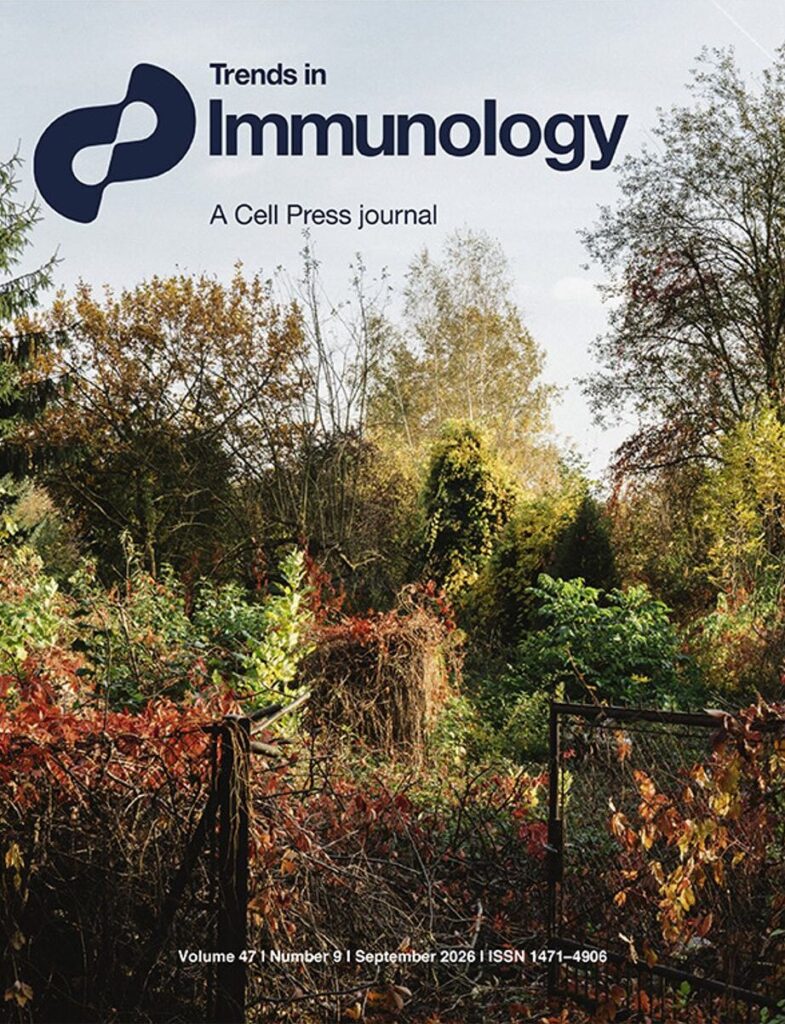
The cover shows a garden gate left ajar, its rusted frame overtaken by vines and autumn decay. This image reflects the intestinal barrier’s fate during ageing reviewed by Gómez de las Heras and Mittelbrunn. A boundary once kept closed by active T cells slowly rusts and opens, letting the surrounding ecosystem spread through unchecked. Similarly, age-related T cell decline breaks down the intestinal protection, driving gut dysbiosis, barrier leakiness, and inflammageing. Microbiota- and T cell-based therapies can restore the barrier and its guards for a healthier ageing.
The epithelial, microbial, and immune components of the intestinal barrier coexist in harmony to prevent undesirable inflammatory outcomes and ensure homeostasis in the host. In this review, we outline molecular mechanisms by which T cells regulate intestinal homeostasis and how the ageing-associated dysfunction of T cells could disturb host–microbiota symbiosis and the physical integrity of the intestinal barrier, ultimately driving inflammageing and poor health outcomes. Finally, we propose microbiota- and T cell-based therapeutic interventions aimed at strengthening the intestinal barrier to promote healthier longevity. Namely, we discuss the transplantation of youthful microbiota, the use of designed probiotics, and the adoptive transfer of competent or engineered T cells.